
Hey content creators and marketers!
Let’s talk about what’s happening in the digital world. It’s 2025, and things are changing fast. Technology is evolving, audience preferences are shifting, and artificial intelligence (AI) is reshaping how we create content.
To stay ahead in digital marketing, you need to embrace innovation, prioritize authenticity, and ensure your content is optimized for both users and search engines.
Let’s explore the top content marketing trends for 2025!
1. The Reign of Short-Form Video Content
Short-form video content dominates social media platforms like TikTok, Instagram Reels, and YouTube Shorts.
With millions searching for “YouTube,” “TikTok,” and “Instagram” every month, these platforms are essential for reaching audiences with limited attention spans. People want quick, engaging videos that entertain or provide value in under a minute.
What works:
- Start with humor or emotion to boost engagement and click-through rates.
- Use SEO-optimized captions, trending hashtags, and keywords like “viral video,” “shorts,” “TikTok trends,” and “YouTube Shorts” for discoverability.
- Leverage AI tools (like ChatGPT and Canva) for content ideas and video editing, but always add your unique style.
- Repurpose videos across multiple channels for omnichannel marketing impact.
2. AI-Generated Content Gets a Human Touch
AI writing tools such as ChatGPT and Jasper are transforming content creation workflows. However, Google and users prefer content that combines AI efficiency with human expertise and originality.
What to do:
- Use AI for outlines, keyword research, and first drafts.
- Add personal insights, a conversational tone, and real-world examples to build E-E-A-T (Experience, Expertise, Authoritativeness, Trustworthiness).
- Fact-check and refine AI drafts to align with your brand voice.
- Share unique experiences to differentiate your content from generic AI output.
3. Interactive Content Is the New Standard
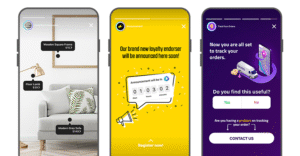
Interactive content-quizzes, polls, AR filters, and choose-your-own-adventure videos-boosts engagement and provides valuable first-party data.
These formats are increasingly searched for and shared on social media.
Try these:
- Embed interactive elements in blogs and social media posts.
- Use polls and quizzes to drive engagement and collect audience insights.
- Experiment with AR/VR experiences for immersive brand storytelling.
4. Hyper-Personalization Powered by AI
Personalization is now expected. AI-powered analytics and segmentation tools help deliver tailored content, product recommendations, and experiences in real time.
How to do good personalization:
- Use AI to segment audiences and deliver targeted content.
- Implement smart recommendation engines for articles, products, or videos.
- Balance personalization with privacy– be transparent about data use.
5. User-Generated Content (UGC) Takes Center Stage
User-generated content (UGC)-reviews, testimonials, unboxing videos, and memes-builds trust and authenticity, which are major ranking factors for Google and social platforms.
Make UGC work for you:
- Feature UGC on your website, YouTube channel, Facebook, and Instagram.
- Reward fans for creating and sharing content about your brand.
- Maintain a library of UGC assets for quick deployment.

6. Audio Content and Voice Search Optimization
Audio content, such as podcasts, continues to grow in popularity, with “podcast,” “Spotify,” and “voice search” among rising search terms.
Optimizing for voice search is crucial as more users interact with content via smart speakers and mobile devices.
How to use audio:
- Launch a podcast to establish authority in your niche.
- Use natural language, FAQs, and conversational keywords for voice search optimization
- Enhance chatbots with conversational AI to improve customer experience.
7. No-Fluff, Fact-Driven Content
Both readers and search engines now prioritize high-quality, fact-driven, and helpful content. Google’s algorithms reward content that demonstrates first-hand experience and expertise.
How to keep it real:
- Collaborate with experts for quotes, interviews, and case studies.
- Regularly audit and update content for accuracy and relevance.
- Support claims with data, statistics, and real-life examples.
8. Advanced SEO: Semantic Search and User Intent
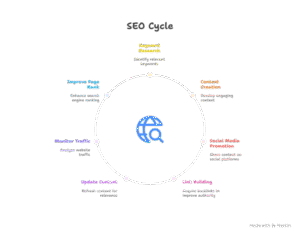
SEO in 2025 is about understanding user intent and semantic search. Google now favors comprehensive, expert content that answers related questions and covers topics in depth.
Improve your SEO:
- Research high-volume keywords like “content marketing,” “AI tools,” “digital marketing,” “SEO trends,” “YouTube,” “TikTok,” and “ChatGPT”.
- Use structured data (schema markup) to help search engines understand your content.
- Optimize for both text and voice queries, and ensure mobile responsiveness
9. Expert-Driven and Thought Leadership Content
Establishing thought leadership is critical for ranking and credibility. Google and users look for content from trusted, knowledgeable sources.
Show your expertise:
- Feature guest posts and interviews with industry leaders.
- Publish original research, case studies, and in-depth analysis.
- Build a reputation as a trusted source in your niche.

10. Behavioral Science and Emotional Storytelling
Content that taps into behavioral science and emotional triggers drives more clicks, shares, and conversions.
Connect with your audience:
- Tell stories that evoke emotion-humor, empathy, inspiration, or curiosity.
- Use social proof (reviews, testimonials) to build trust.
- Apply ethical persuasion techniques to guide users toward action.
That’s it!
To succeed with content in 2025, combine AI-powered tools with human creativity. Focus on hyper-personalization, interactive formats, and expert-driven, emotionally resonant content.
Optimize for both users and search engines, and always keep it authentic.

